Why Your Website Is Not Generating Leads (And How to Fix It)
Many businesses invest heavily in websites, SEO, and ads—yet still struggle to generate consistent leads.
If visitors are landing on your site but not taking action, the problem is not traffic—it’s conversion clarity, trust, and alignment of intent.
This guide breaks down exactly why websites fail to convert and shows how to fix each issue step by step.
1. The Website Clarity Funnel: From Visitor to Conversion
The problem
Most websites jump straight into selling without first explaining:
What they do
Who it’s for
Why it matters
Visitors don’t have time to figure it out — confusion kills conversions.
The fix
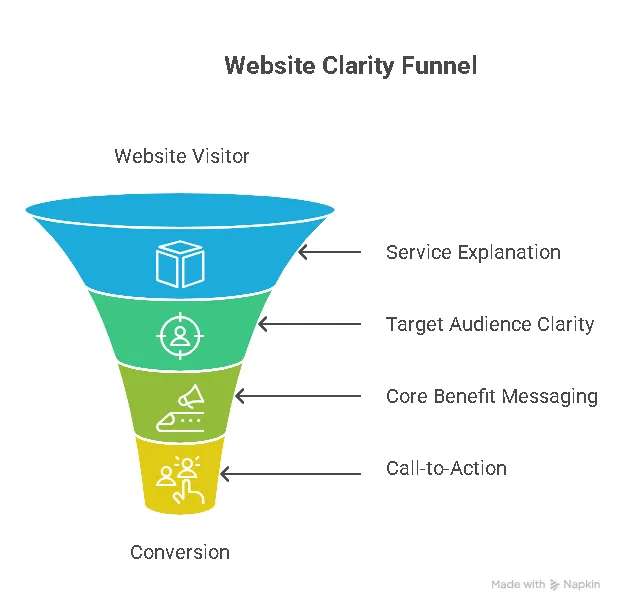
Your website must follow a clarity funnel:
Service explanation – What problem you solve
Target audience clarity – Who this is for
Core benefit messaging – Why it’s valuable
Clear call-to-action – What to do next
If any step is missing, users drop off.
2. The Website Conversion Funnel: Why Most Visitors Never Convert
The problem
Not every visitor is ready to become a lead. Most websites treat all visitors the same, which causes friction.
The fix
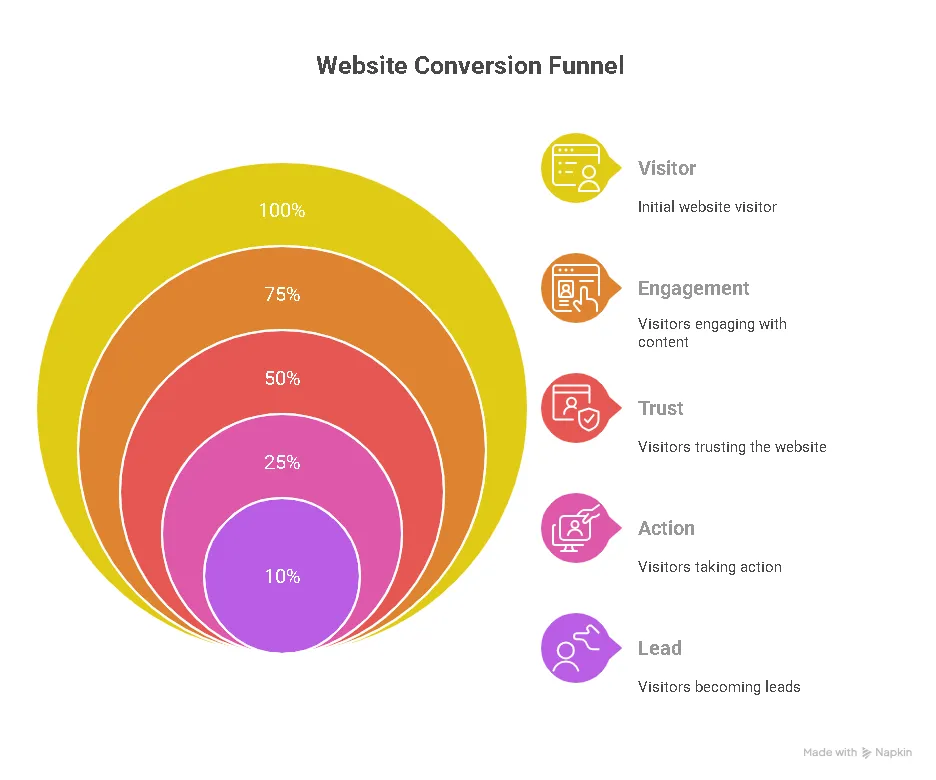
Design your website around conversion stages:
Visitor – Discovering your brand
Engagement – Reading, scrolling, watching
Trust – Believing you’re credible
Action – Clicking, contacting, booking
Lead – Submitting details
Your content, layout, and CTAs should guide users naturally from one stage to the next.
3. The Real Reasons Websites Fail to Generate Leads
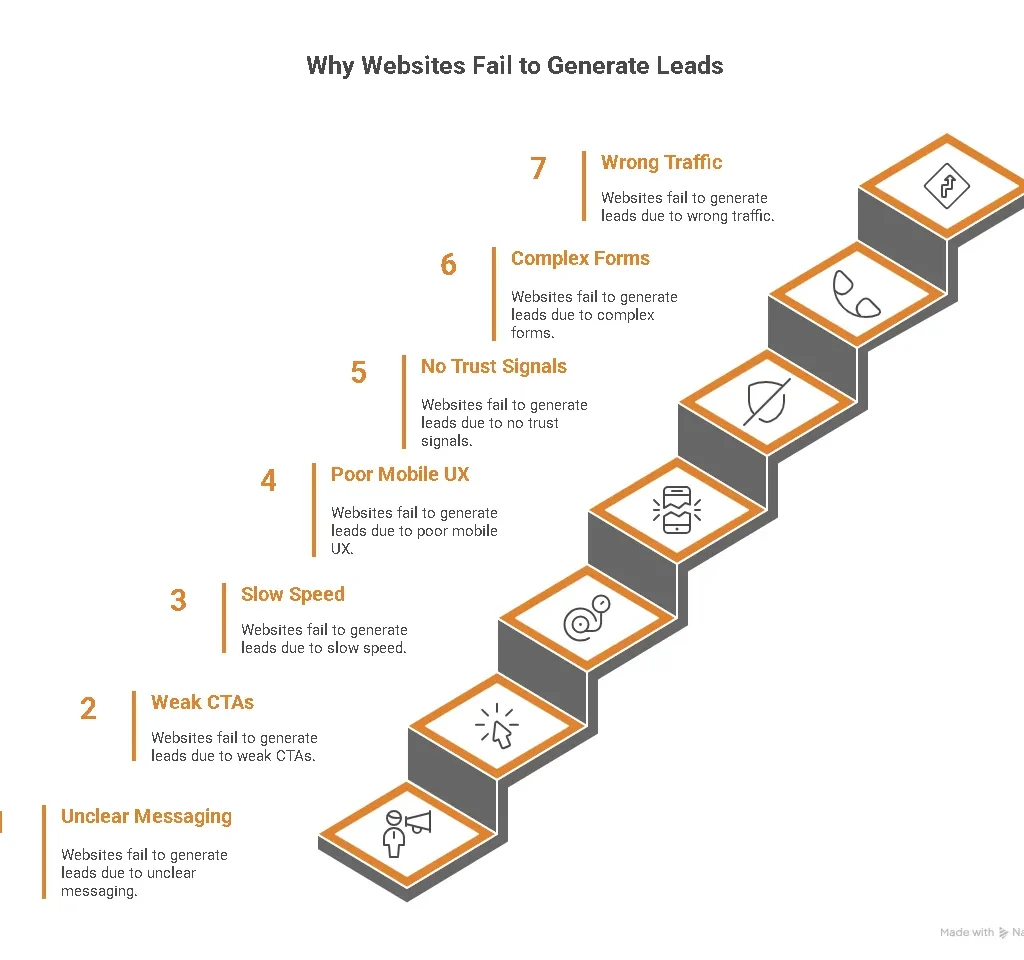
The most common issues we see:
Unclear messaging – Users don’t understand the value
Weak or hidden CTAs – No clear next step
Slow website speed – Users leave within seconds
Poor mobile experience – Most traffic is mobile
Lack of trust signals – No proof or credibility
Complex forms – Too many fields, too much friction
Wrong traffic – Visitors with no buying intent
Each of these alone can reduce conversions. Combined, they completely block growth.
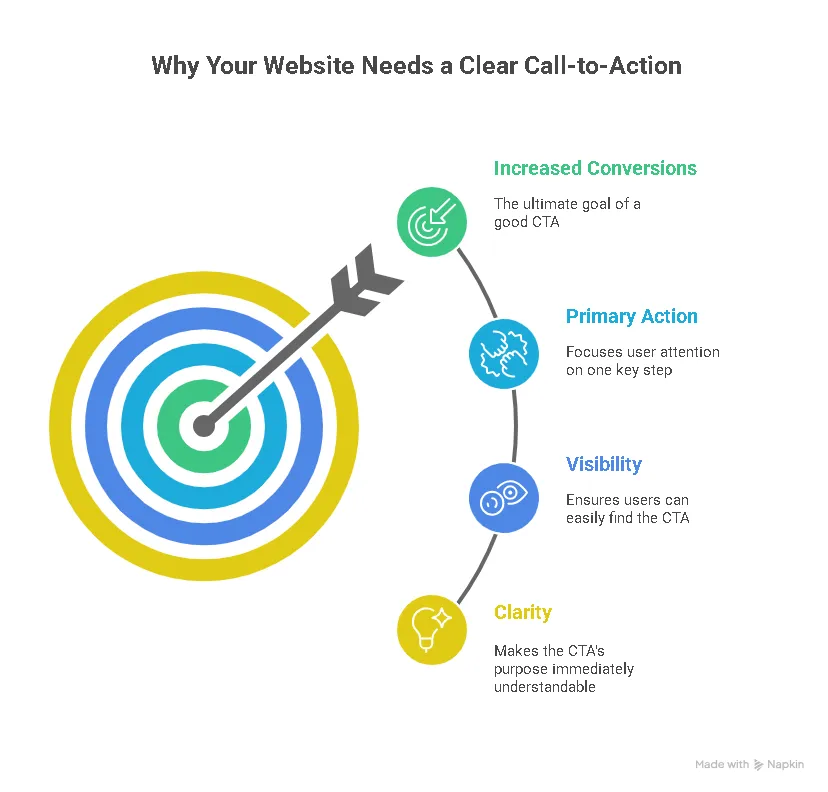
Why Your Website Needs a Clear Call-to-Action (CTA)
The problem
Many websites have CTAs like:
“Learn More”
“Submit”
“Click Here”
These don’t tell users what they get.
The fix
High-converting CTAs must be:
Clear – Instantly understandable
Visible – Easy to find without scrolling
Action-focused – One main goal per page
Benefit-driven – Explain the outcome
Examples:
“Get a Free SEO Audit”
“Book a Free Strategy Call”
“Request a Custom Quote”
5. Trust Signals: The Missing Piece in Most Websites
The problem
People don’t convert unless they trust you — especially in digital services.
The fix
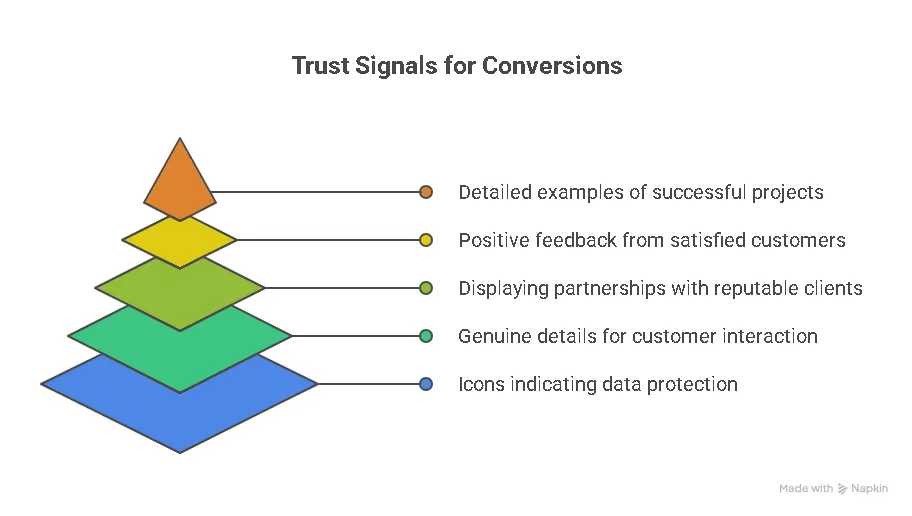
Add strong trust signals such as:
Real project case studies
Client testimonials
Performance metrics (traffic growth, leads, ROI)
Security icons & data protection mentions
Clear contact details & real team presence
Trust reduces hesitation and increases conversion confidence.
6. Forms That Convert: Why Simple Beats Smart
The problem
Long forms scare users away. Every extra field reduces conversion rate.
The fix
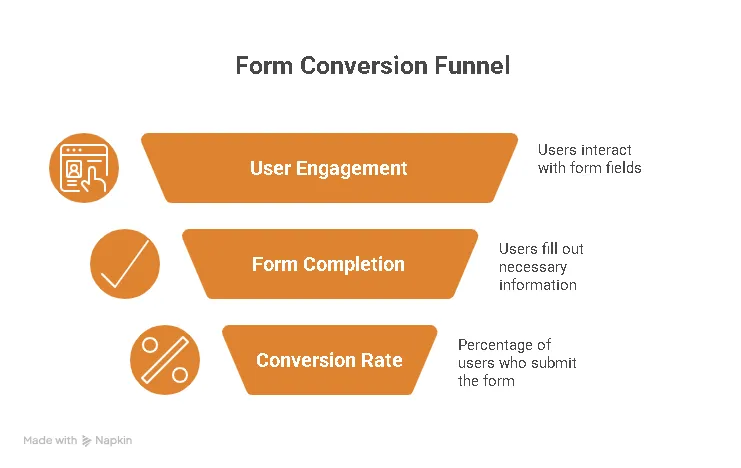
Optimized forms follow this funnel:
Engagement – Clear context before the form
Form completion – Minimal required fields
Conversion – Easy submission, fast confirmation
Best practice:
Name
Email
One qualifying question (optional)
That’s it.
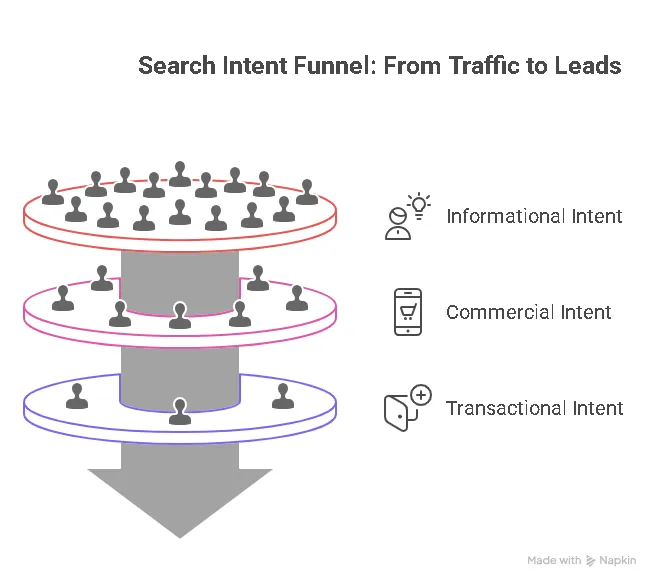
7. Search Intent Funnel: Are You Attracting the Right Visitors?
The problem
Many websites rank for keywords that bring traffic — but not buyers.
The fix
Align content with search intent:
Informational intent – Blogs & guides
Commercial intent – Comparisons & services
Transactional intent – Service pages & CTAs
Your website should intentionally guide users from learning → evaluating → converting.
Final Fix Checklist: Turn Traffic Into Leads
To generate consistent leads, your website must:
Communicate value instantly
Match user intent
Build trust early
Remove friction
Guide users with clear CTAs
Optimize for mobile & speed
When clarity, trust, and intent align, leads follow naturally.
Want Help Fixing Your Website?
If your site is getting traffic but not conversions, we help businesses:
Identify conversion leaks
Redesign high-impact pages
Improve UX, SEO & CRO together
Turn visitors into qualified leads
The most common reason is lack of clarity. Visitors don’t understand your value proposition within the first few seconds. If users can’t quickly identify how your service solves their problem, they will leave without taking action — regardless of how good your design or traffic is.
Website clarity directly impacts conversions. Clear service explanations, audience-focused messaging, and visible CTAs reduce confusion and friction. When visitors immediately understand what you do and how you can help them, they are far more likely to convert into leads.
Trust signals reduce hesitation and increase confidence. Elements like testimonials, real case studies, client logos, performance results, and transparent contact information help visitors feel safe taking action. Without trust signals, users may hesitate to submit forms or contact you.
Yes. Slow-loading websites significantly reduce conversions. Most users abandon a page if it takes more than a few seconds to load, especially on mobile devices. Improving website speed enhances user experience, engagement, and conversion rates.
High-converting forms usually have 3–5 fields maximum. Asking for too much information creates friction and lowers submission rates. Start with essential details like name and email, and collect additional information later in the sales process.
Search intent determines whether visitors are ready to convert. If your website targets informational keywords but expects immediate leads, conversions will be low. Aligning content with informational, commercial, and transactional intent ensures users land on the right page at the right stage.
Most website traffic comes from mobile devices. If your site is hard to navigate, slow, or poorly designed on mobile, users will leave before converting. Mobile-friendly UX is essential for modern lead generation.
Yes. Clear, benefit-driven CTAs significantly increase conversions. Generic CTAs like “Submit” or “Learn More” don’t motivate action. Effective CTAs clearly state the outcome, such as “Get a Free SEO Audit” or “Book a Free Strategy Call.”
To fix lead generation issues:
Improve messaging clarity
Optimize CTAs
Add trust signals
Simplify forms
Improve website speed
Align content with user intent
Optimize for mobile devices
A conversion-focused audit can identify exactly where users are dropping off.